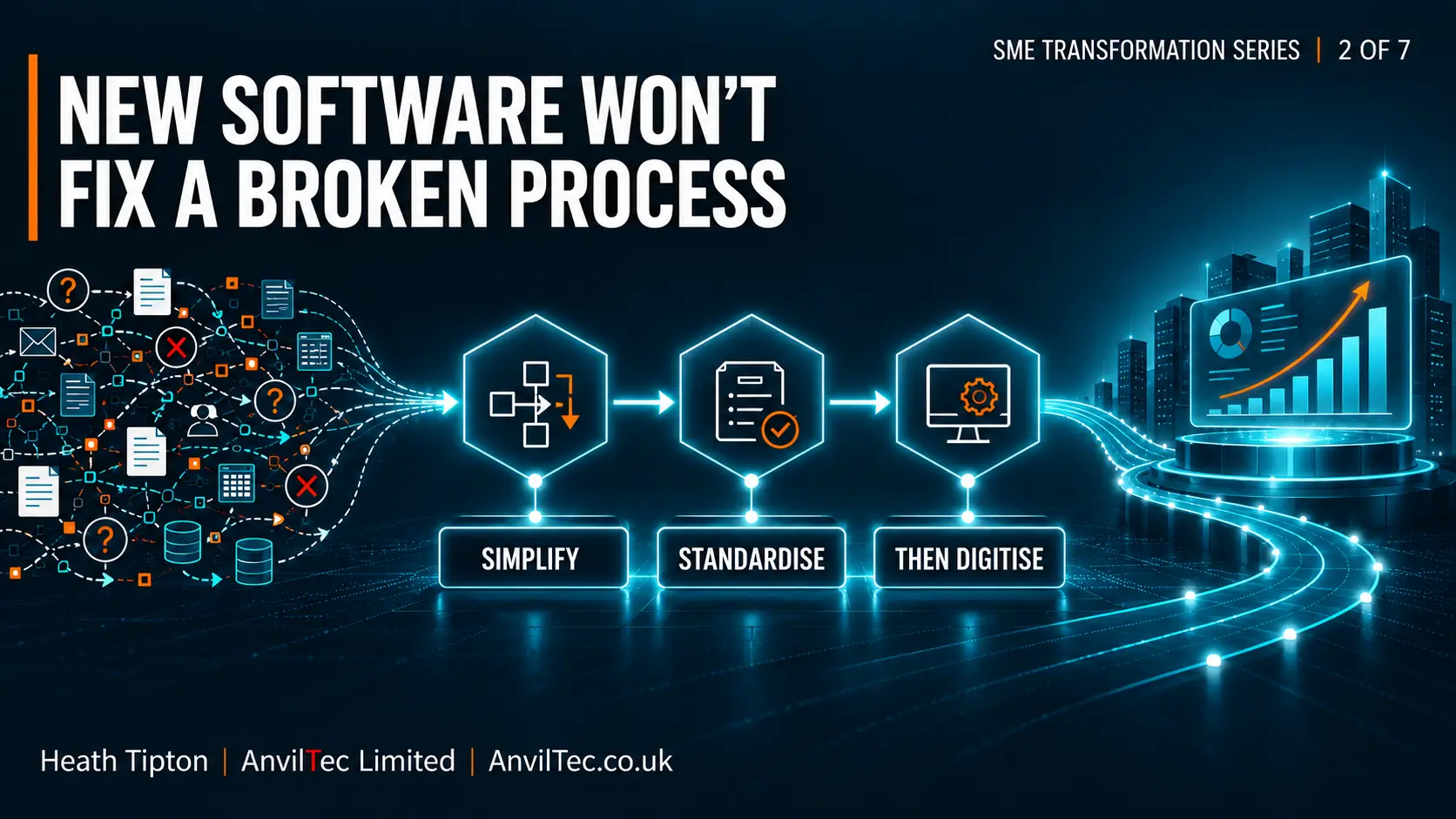
New software can make a good process faster. It can also make a broken process more expensive, more rigid and harder to change.
Too many technology programmes begin with product demonstrations before the business has agreed how work should flow. Existing complexity is then configured into the new system: unnecessary approvals, duplicate data entry, unclear ownership and exceptions that have become normal practice.
Design the business before configuring the system
- Map how the process actually works—not how the procedure says it works.
- Remove steps that do not add value or control risk.
- Clarify ownership, decision rights and hand-offs.
- Standardise the core process and deliberately manage genuine exceptions.
- Define the data, controls and management information required.
- Only then decide how technology should enable the target process.
This approach can feel slower at the beginning. In practice, it reduces customisation, improves adoption and avoids paying an implementation partner to automate yesterday’s problems.
The most valuable question is not ‘Which system do we want?’ It is ‘How should this business work?’