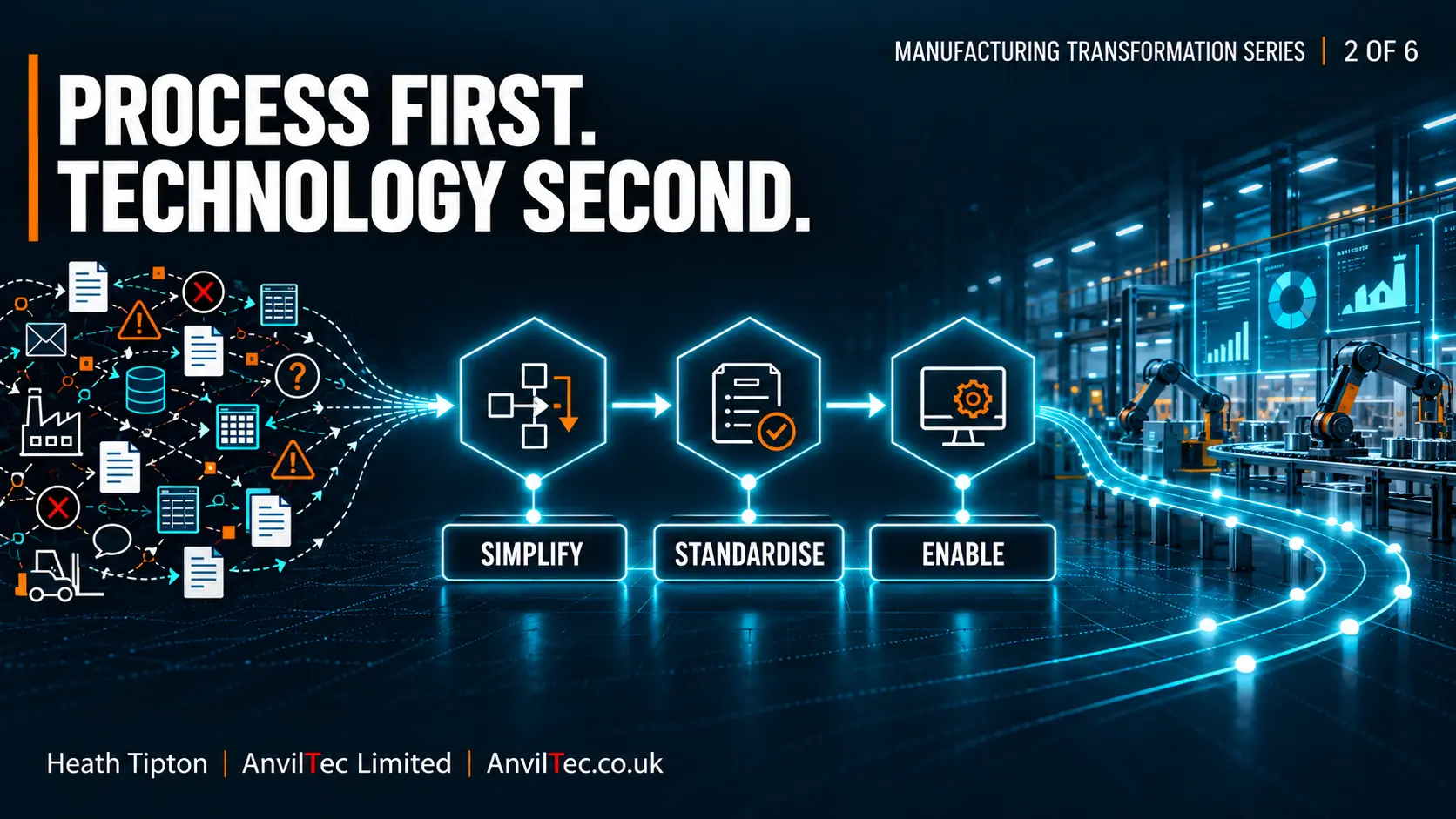
New technology can accelerate a strong manufacturing process. It can also industrialise waste, duplication and unclear accountability.
When an ERP, PLM or CRM programme starts with system demonstrations, the organisation is encouraged to think in screens, modules and features. The more important question is often left unanswered: how should work flow through the business?
Before configuring technology
- Map the real process, including workarounds and exceptions.
- Identify where value, time or control is being lost.
- Clarify ownership and decision rights across functions.
- Standardise the core process while managing genuine exceptions.
- Define the information and controls required at each stage.
- Agree the operational measures the new process must improve.
Only then should the business decide how technology enables the target state. This sequence reduces unnecessary customisation, improves adoption and prevents the implementation partner from automating yesterday’s problems.
Process-first does not delay technology. It gives technology a sound operating model to support.